
Consultants who help lease these properties say this is the steepest decline at least in a decade.

Since April, India has seen multiple strains of the coronanavirus sweep the nation, upending life and businesses alike. Out-of-home retail and discretionary categories such as durables, auto, fashion, lifestyle, hospitality, food services, travel, and tourism have been the worst-hit as Covid cases remain high, leaving state governments with no option but to curtail mobility and economic activity.
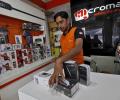
According to research firm IDC, a slowdown in smartphone shipments began showing up as early as late February, though companies insist that the March quarter was fine, albeit on a low base.

'I remain optimistic that 2021 will be better than 2020 because we have visibility of vaccinations this year.'

Some companies argue that the culture of staying, working and learning at home will persist for a while, altering lifestyle habits of consumers.
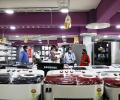
Durable goods companies and retailers say online sales won't compensate for the fall in offline sales.

Maharashtra, which contributes between 12 and 15 per cent of appliances sales, announced lockdown-like curbs, meaning there will be no business for the second half of the month as well from the state.

'Post-Covid world will be different from the pre-Covid world.'

According to the order, all factories producing essential goods and services will remain operational at full capacity.

Gold and diamond retail chain Malabar Gold & Diamonds will be investing Rs 1,600 crore in FY22 to launch 56 stores globally with 40 across India and 16 internationally in FY22 to further boost its retail presence across the globe. The move is expected to generate over 1,700 jobs. In India, the expansion strategy is centred in states like Tamil Nadu, Telangana, Andhra Pradesh, Karnataka, Maharashtra, Delhi, West Bengal, Uttar Pradesh, Odisha and Kerala. Internationally, the expansion will be in markets such as Singapore, Malaysia, Oman, Qatar, Bahrain and UAE.

Metal prices from copper to aluminum and tin have shot up by about 7-32 per cent in the past three months.

Koo has so far raised $4.1 mn in Series A funding from existing investors Accel, Kalaari Capital, Blume Ventures and 3one4 Capital.

From omnichannel to AI and 3D technology, the fashion industry is in the middle of a digital revolution.

Zostel could get upwards of $600 million if arbitration goes through.

Employees of some top Indian companies were in for a pleasant surprise when they received a mail from their HR team announcing a hike in salaries and bonuses. Led by IT firms and start-ups, HR managers say that while some have offered cash and stock options, others are in a wait-and-watch mode and add the trend will pick up in other sectors. For example, IT giant Cognizant - which had an attrition rate of 19 per cent in the December quarter - has established a $30-million employee retention fund in order to bring down the high attrition rate.

Fresher hiring is expected to more than double compared to last year.

The move is significant since it signals the growing importance of foods in Marico's overall strategy. It also comes six months after Marico stepped into honey, a Rs 1,500-crore category dominated by players such as Dabur.

IPL 2020 was the first sports tournament to surpass 400 billion viewing minutes.

Increase in occupancy will pave way for Hindi blockbusters to release, say multiplex operators.

60-65 per cent of the FMCG industry's overall sales come from urban areas; 35-40 per cent from rural areas.
 © 2026 Rediff.com - Advertise with us - Disclaimer - Privacy Policy - Sitemap - Feedback - About us - Terms of use - Grievances